
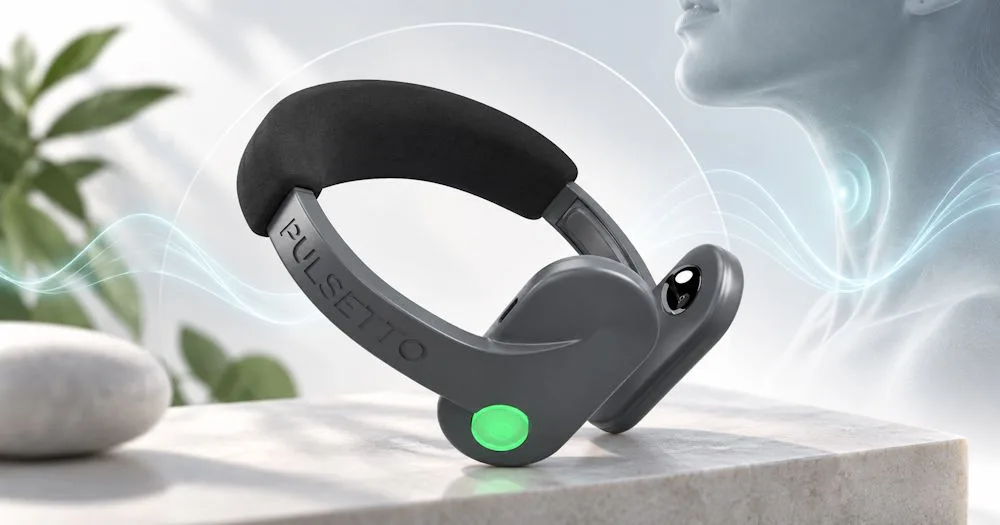
If you keep reaching the end of the day feeling wired when you want to slow down, Pulsetto offers a different kind of wellness routine. It sits around your neck and uses mild electrical stimulation aimed at the vagus nerve, with sessions controlled through an app.
This Pulsetto review looks at the part that matters before spending your money: what the device actually does, how much evidence exists behind this type of stimulation, what the limitations are, and whether Pulsetto fits your daily routine.
What is Pulsetto and how does it work?
Pulsetto is a rechargeable device worn around the neck. You apply conductive gel, position the device as instructed, connect it to the Pulsetto app, choose a program, and adjust the stimulation until you feel a mild tingling sensation.
The company says its programs use different electrical stimulation patterns intended to influence the vagus nerve. Its help materials currently describe programs related to areas such as stress, sleep, anxiety, burnout, and other wellness goals, although the available program mix can vary by device and app version.
The useful part is convenience. You do not need surgery or an implanted electrode. Research on non-invasive vagus nerve stimulation as a category shows that electrical stimulation through the skin can activate vagal pathways, but that does not mean every consumer device or every wellness claim has the same level of clinical evidence.
That distinction is the main limitation in this review. Pulsetto itself describes the product as a general wellness device rather than a medical device. You should view it as a wellness routine, not as a replacement for treatment from a doctor.
How much does Pulsetto cost?
The current price was not provided in our product catalog, so we will not quote a number that may already be outdated. Confirm today's price on the official sales page before ordering.
Our catalog includes the coupon code PULSETTO10. Because no verified discount amount or expiration date was supplied, check the checkout page to confirm what the code currently applies to.
This matters with a device like Pulsetto because you are buying hardware you may use repeatedly rather than paying for a single wellness session. Before ordering, compare the current device price with how often you realistically expect to use it.
Pulsetto pros and cons
Pros
- Uses non-invasive stimulation, so no surgical implant is required
- App guides you through setup and sessions
- Sessions can fit into a short daily wellness routine
- Rechargeable hardware avoids replacing disposable devices after every session
- The company currently lists a two-year standard warranty
Cons
- It is a general wellness device, not a medical treatment
- You need conductive gel and proper neck placement
- Electrical stimulation may feel unpleasant to some people
- Several medical conditions and implanted devices can make it unsuitable
The biggest practical downside is that Pulsetto asks for more involvement than simply wearing a passive wellness gadget. You need to apply gel, place the electrodes correctly, connect the device, and choose a session.
The manufacturer says the sensation should feel like mild tingling rather than pain. If stimulation becomes painful or you develop symptoms such as dizziness, chest discomfort, or excessive skin irritation, its safety guidance says to stop the session.
Who is Pulsetto for?
Who it's for
- You want to add a short vagus nerve stimulation session to your wellness routine
- You prefer a device with guided sessions instead of figuring out stimulation settings yourself
- You want a non-invasive option that can be used at home
- You expect Pulsetto to diagnose or treat a medical condition
- You have a contraindication listed by the manufacturer
- You dislike neck-worn electrical stimulation or using conductive gel
Safety deserves more attention than the marketing headline. Pulsetto says people with active implanted electronic devices, certain metal implants near the neck, some cardiovascular conditions, a history of seizures or fainting, pregnancy, and several other situations should avoid the device or speak with a medical professional first.
When Pulsetto may pay off, and when it may not
Pulsetto makes the most sense when you already know you will use it consistently. A device sitting in a drawer cannot add much to your routine, no matter how interesting the technology sounds.
It may be easier to justify if you want a guided routine at home, prefer non-invasive stimulation over implanted approaches, or already spend time on relaxation practices and want a device-based option.
It makes less sense if you are buying mainly because you expect a guaranteed change in sleep, stress, anxiety, pain, or another health outcome. Research on non-invasive vagus nerve stimulation is active, but findings vary by stimulation method and condition, and studies of one device cannot automatically prove the effects of another.
You may also want to skip it if you dislike routines that involve an app and conductive gel. Pulsetto is fairly simple once set up, but it still asks you to do more than press a button on your wrist.
Pulsetto alternatives
Guided breathing and HRV biofeedback
If your main goal is building a calming daily routine, guided breathing or heart-rate-variability biofeedback can cost much less and does not require electrical stimulation on your neck.
You lose the specific stimulation approach that Pulsetto provides. You gain a simpler way to test whether regularly setting aside a few minutes for nervous-system-focused relaxation fits your life before spending money on hardware.
Clinician-guided non-invasive VNS
Medical non-invasive vagus nerve stimulation devices also exist for specific clinical uses. This is a different category from Pulsetto's consumer wellness positioning, and access, indications, and supervision can differ.
You gain medical oversight and a device intended for a defined clinical purpose. You lose the simplicity of buying a general wellness product for an everyday home routine. If your goal involves a diagnosed condition, discussing medical options with a qualified professional is the safer starting point.
Is Pulsetto legit and where should you buy it?
Pulsetto is a real commercial device with published setup instructions, safety information, returns terms, warranty information, and a support center. Its official documentation also clearly describes it as a general wellness device rather than a medical treatment.
That answers the basic legitimacy question, but it should not be confused with proof that every buyer will experience the same result. Wellness experiences can vary, and the broader scientific evidence for vagus nerve stimulation depends heavily on the device, stimulation method, and reason it is being studied.
If you decide to buy, use the official sales page reached through the button in this article. Confirm the current product version, final price, shipping terms, return conditions, and anything included with the order before you pay.
Guarantee, returns, and support
Pulsetto's current official return policy says physical products can be returned within 30 days of delivery when the eligibility conditions are met. The company asks buyers to contact support within that period, and its policy says return-label costs can vary by location.
The company also currently states that Pulsetto devices include a standard two-year warranty, with an optional warranty extension available. Because commercial terms can change, verify the terms shown for your specific order before buying.
Keep the original packaging and accessories until you know you plan to keep the device. Pulsetto's return policy specifically lists original packaging requirements, so throwing the box away immediately can create unnecessary trouble if you later decide to return it.
Frequently asked questions
How we evaluated Pulsetto
We did not claim a hands-on test that did not happen. This review compares Pulsetto's official usage instructions, safety information, commercial policies, and product positioning with independent published research on non-invasive vagus nerve stimulation.
Independent reviews of vagus nerve stimulation show that non-invasive stimulation is an active area of research and can engage vagal pathways. They also show why caution matters: study designs, stimulation methods, target conditions, and evidence quality vary, so broad research findings should not be turned into guaranteed claims about one consumer wellness product.
Final verdict on Pulsetto
Pulsetto has a clear use case. If you want a device-guided wellness routine built around non-invasive vagus nerve stimulation, it gives you a structured way to do that at home without an implant.
The reason to remain realistic is equally clear. Pulsetto is a wellness device, results are not guaranteed, and it is unsuitable for some people. Treat the purchase as adding a wellness habit to your day, then judge whether the current price makes sense for how often you expect to use it.
Check Pulsetto before you decide
Confirm today's price, current device version, and purchase terms on the official sales page.
See today's price